


Screw conveyors
are a type of mechanical conveying system used to move bulk materials horizontally or at a slight incline. They consist of a rotating helical screw blade, known as an auger, that is enclosed in a tube or trough. As the screw rotates, it pushes the material along the length of the conveyor, allowing for efficient and controlled transportation.
Here are some key features and components of screw conveyors:
Screw or Auger:
The screw is the central component of a screw conveyor. It is typically a helical blade that is mounted on a central shaft. The shape and design of the screw can vary depending on the specific application and material being transported. The screw can be solid or hollow, and it can have different pitch configurations (single, double, or triple) to accommodate various material characteristics.


Drive Unit:
Screw conveyors are typically powered by an electric motor through a drive unit. The drive unit consists of a gearbox or direct drive mechanism that connects to the screw shaft, providing the rotational motion to move the material. The motor speed can be controlled to adjust the conveyor’s throughput.

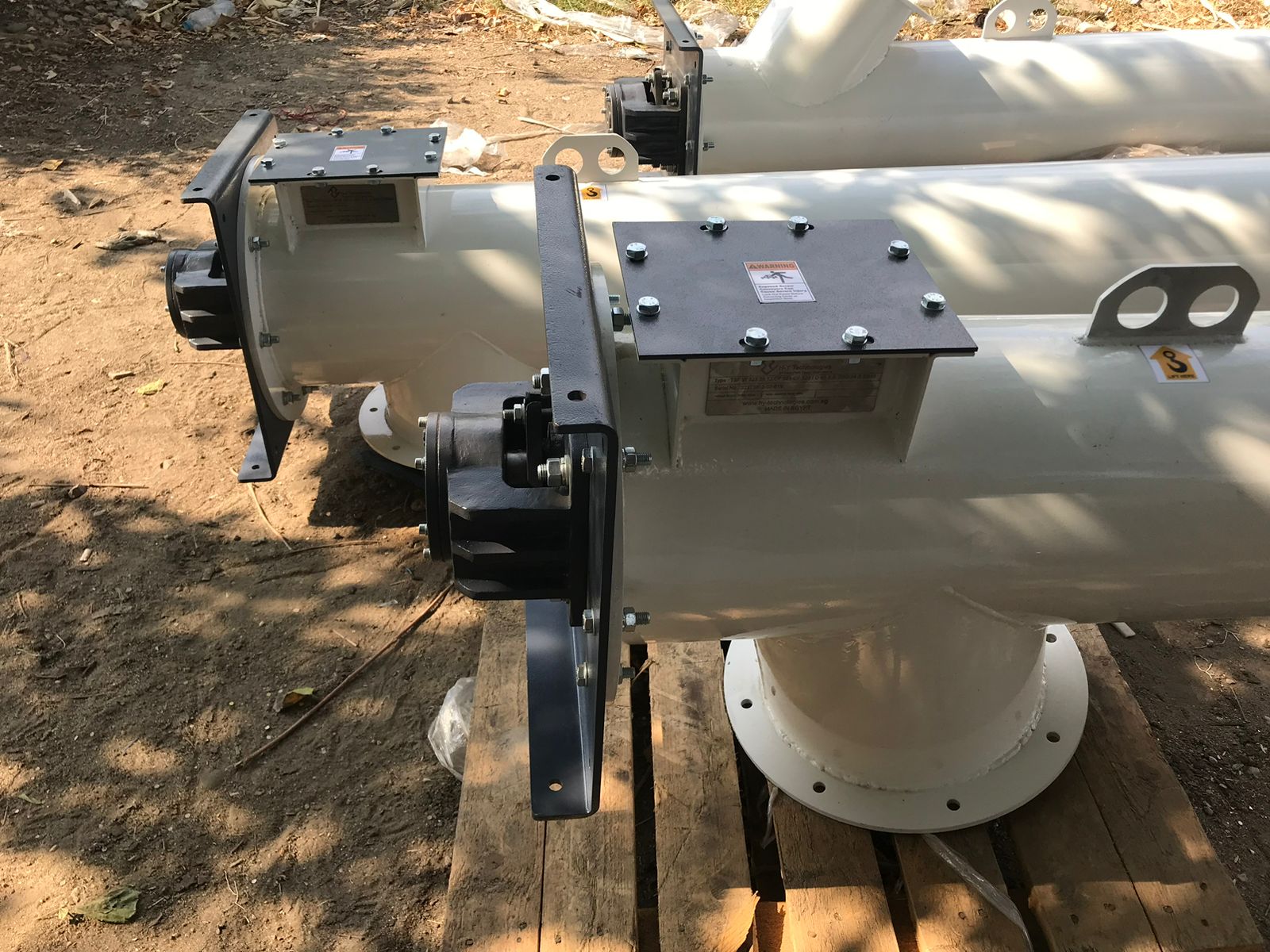
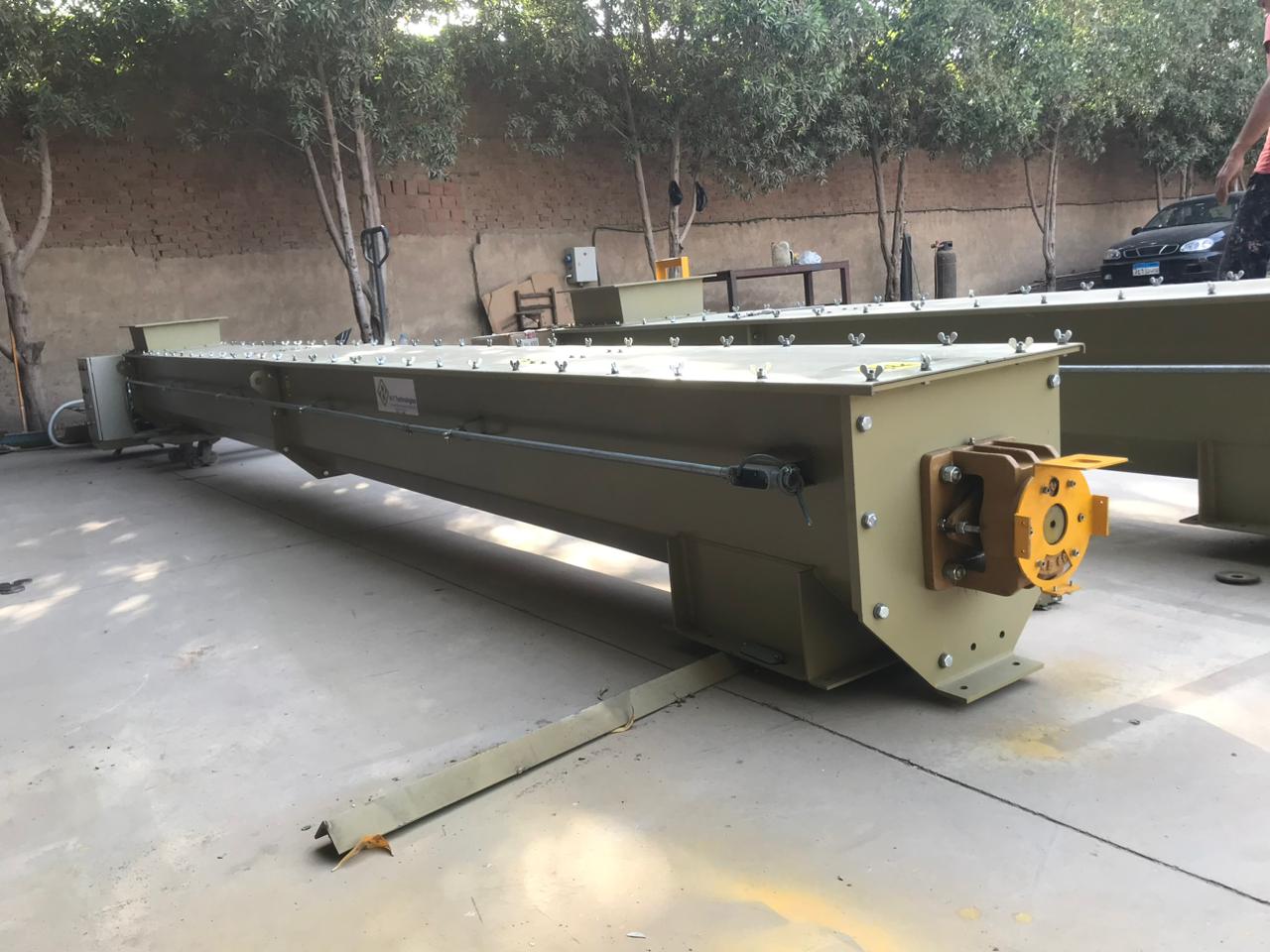
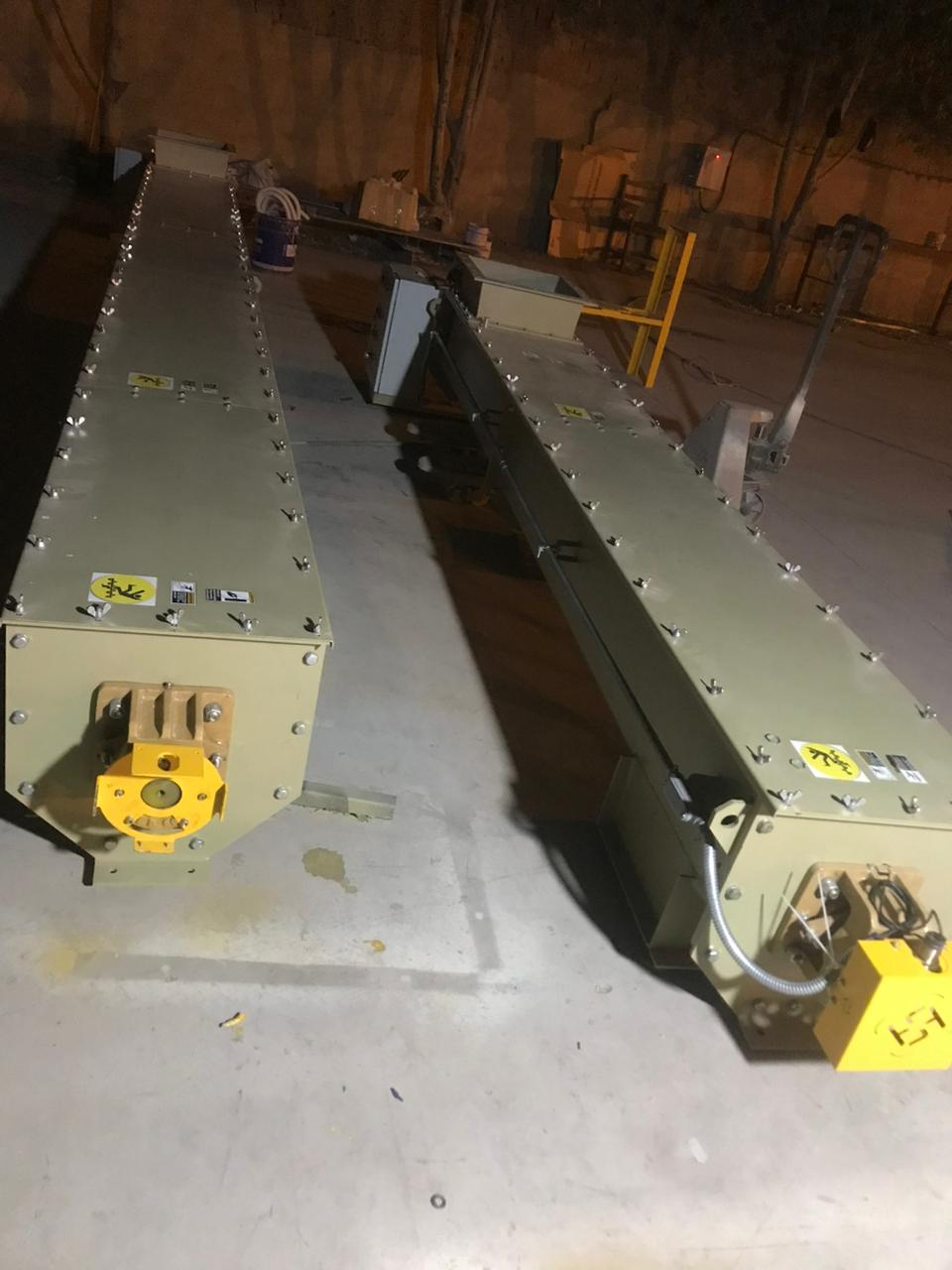
Supports and Stands:
Screw conveyors are supported by stands or structures at appropriate intervals to maintain stability and proper alignment. The supports can be adjustable in height and can include bearings or bushings to support the screw shaft.
