


Rotary valves and airlocks
are mechanical devices commonly used in various industries, including manufacturing, food processing, pharmaceuticals, and agriculture. They play a crucial role in controlling the flow of bulk materials, such as powders, granules, pellets, and other solids, within a processing system. Let’s take a closer look at rotary valves and airlocks:
Rotary Valves:
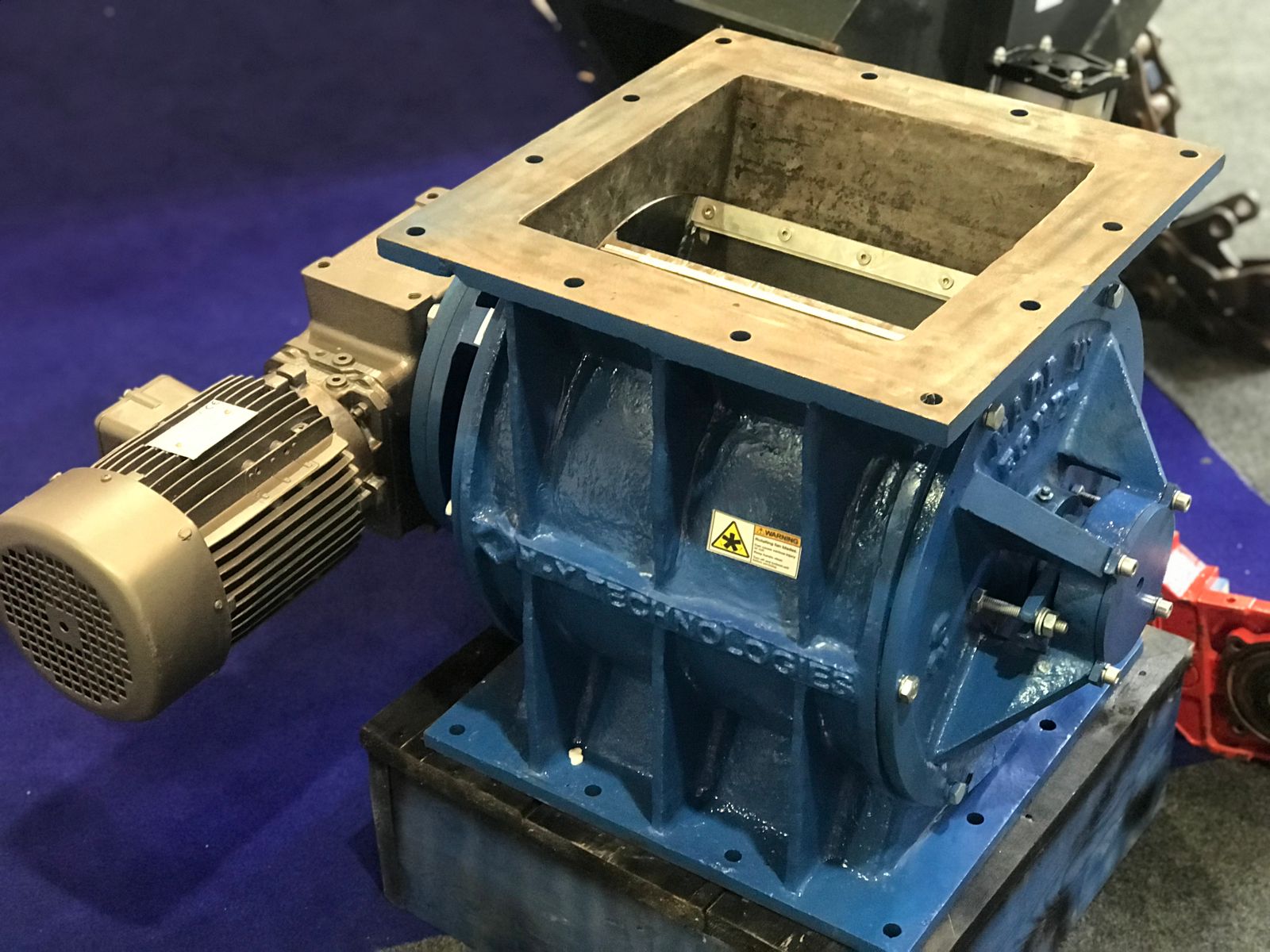
Rotary valves are essentially rotary airlocks that are used to regulate the flow of materials between different areas of a system while maintaining an airtight seal. They consist of a cylindrical housing with a rotating rotor inside. The rotor has vanes or blades that sweep the material from the inlet to the outlet.


Rotary valves
are available in different configurations, such as drop-through, blow-through, and side-entry, depending on the specific application requirements. They are commonly made of materials like stainless steel, cast iron, or aluminum, depending on the material being handled and the operating conditions.



Airlocks:
Airlocks, also known as rotary feeders, are a specific type of rotary valve designed primarily to control the flow of materials while maintaining an effective seal against air or gas leakage. They are used to transfer bulk materials from one environment to another, typically between atmospheric pressure and a controlled or low-pressure system.
The key features and purposes of airlocks include:
– Preventing air or gas from entering or escaping between different pressure zones.
– Feeding materials into a pneumatic conveying system while maintaining the system’s pressure.
– Acting as a seal between two areas with different atmospheric conditions.


Airlocks
are commonly used in pneumatic conveying systems, dust collection systems, and other applications where maintaining pressure differentials is crucial. They are available in various sizes and configurations to accommodate different material types, flow rates, pressure differentials, and operational requirements.